Digital Innovation Among Communities for Climate Adaptation
According to the World Meteorological Organisation (WMO), Africa bears an increasingly heavy burden from climate change and disproportionately high costs for essential climate adaptation. Temperatures are increasing slightly above the global average, multi-year droughts threaten the Arid and Semi-Arid Lands (ASALs) of the continent and extreme flash floods result in loss of livelihoods, livestock, cropland and destructions to small businesses. Such has been the experiences for over a decade now and as recent as between 2023 and 2025 in Kenya, Uganda, Ethiopia, Benin and many other African countries. The countries are said to lose 2-5% of Gross Domestic Product (GDP) with the cost of climate adaptation estimated to be between US $30-50 billion annually over the next decade.
In May 2025, a publication by the UN revealed that extreme weather and climate change impacts are hitting every single aspect of socio-economic development in Africa – exacerbating hunger, insecurity and displacement. This calls for a need to amplify African voices and developments for climate resilience and environmental justice.
As part of such efforts, the Local Networks (LocNet) initiative hosted a great mentorship and peer-to-peer learning experience workshop on the AFRALTI campus between 25th to 27th November 2025 to discuss the use of Internet of Things (IoT) and Artificial Intelligence (AI) in supporting Climate Resilience and Environmental Justice. The LocNet initiative is a collective effort led by the Association for Progressive Communications (APC) and Rhizomatica in partnership with in-country and grassroot groups in Africa, Asia, Latin America and the Carribean and aims to directly support sustainable community networks (CNs) and community-centred connectivity pursuits.
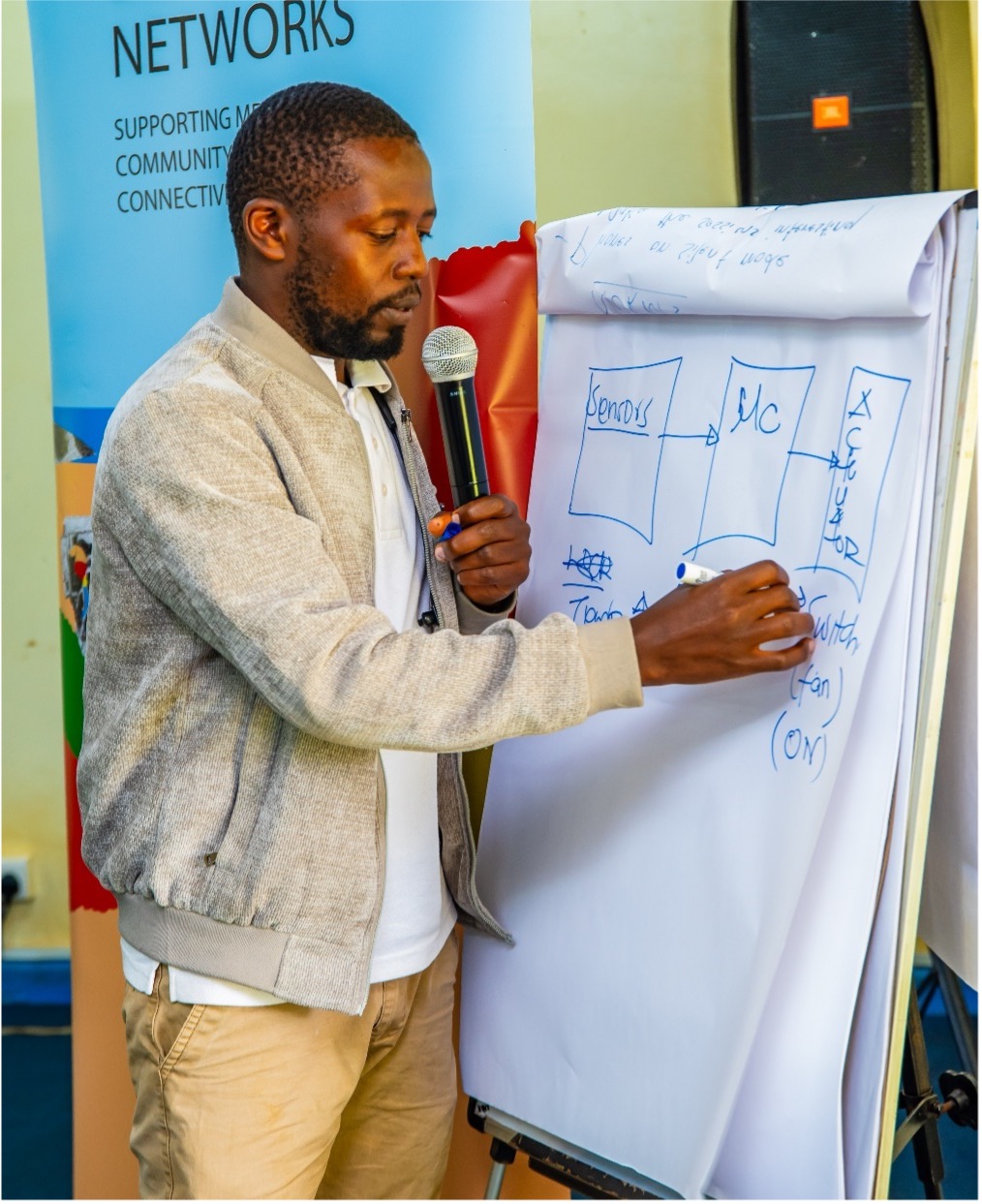
Wireless Planet (WP) is honoured to have been selected to lead the peer-to-peer mentorship and technical capacity-building sessions during the workshop covering the aspects of implementing IoT-based technologies among communities for climate adaptation. Working in collaboration with other micro grantees which included Athi CN, Kijiji Yeetu, Digital Rurals and Bahari CBO, WP shared its experiences in deploying Low Power Wide Area Networks in Busia County and installing 26 mini weather stations to support access to hyperlocalised weather information by smallholder farmers in Busia County. It also shared similar experiences conducted in Marsabit County where 2 mini weather stations were recently installed to study the differences between the two counties which feature different climatic conditions. Marsabit County is the largest County in Kenya and is predominantly arid.
In both deployments, WP has engaged local community groups to evaluate mechanisms and approaches that can provide affordable Internet access, devices (smartphones) and build ICT skills to the smallholder farmers and local communities to ensure access to the weather information receives valuable interpretation and action. Hence, the engagements with the other micro grantees in the room was instrumental in laying out how the communities within which the micro grantees exist, can be enabled to participate and be part of conversations on equitable solutions and the respect, protection and fulfilment of human rights in the context of climate change mitigation and adaptation.
The Environmental Justice Backstory – UN Perspectives
The United Nations Development Programme’s (UNDP) strategy for advancing environmental justice elaborates a three-pronged approach: establishing enabling legal frameworks, strengthening people-centred and effective institutions and increasing access to justice and legal empowerment in environmental matters. Scientists have warned that Earth has entered the Anthropocene – a new geological epoch.
Having been crossing all the planetary boundaries that are a precondition for our own survival, Anthropocene calls for just transformations in the way we live, work and cooperate, as well as new social norms, improved incentives and working with nature whilst respecting and promoting human rights. Environmental Justice, therefore, is a call to action. Historically, environmental justice was related to concern that environmental risks and hazards disproportionally affected societal groups in the most vulnerable and less empowered contexts and countries. However, the conceptualisation of Environmental Justice, now considers a focus on human rights with the following perspectives (as extracted from the UNDP’s Technical Paper on Environmental Justice):
- The impacts of climate change are disproportional: developing and least developed countries appear to be most affected, despite contributing the least to the causes of climate change. Similarly, disadvantaged and vulnerable groups are hit the hardest having less means to cope and adapt, including children and young people; the elderly; indigenous peoples and local communities (IPLCs); refugees and those displaced by natural disasters; economically disadvantaged people; and women and girls.
- Climate change has caused (and will increasingly lead to) the loss of livelihoods, housing and jobs, as well as parts of territories in some countries. In many places, climate change has severely affected agriculture and resulted in food insecurity.
- Changing climatic conditions are also linked to internal and cross-border migration,30 and exacerbated conflict over access to natural resources.
Some of these experiences have been felt in the marginalised communities in Kenya such as in Turkana, West Pokot and Samburu counties where, at present, CNs now exist. As such, the 25th – 27th November workshop was so timely in socialising these considerations among the community-centred connectivity groups in the room at AFRALTI.
Why Emerging Technologies for Climate Adaptation Matters
WMO’s publication on “Africa Faces Disproportionate Burden from Climate Change and Adaptation Efforts” strongly advocates for African countries to prioritise increased investment in National Meteorological and Hydrological Services to accelerate implementation of early warning systems that can provide:
- Disaster risk knowledge.
- Detection, observation, monitoring, analysis and forecasting.
- Warning dissemination and communication.
- Preparedness and response capabilities.
Previous studies such as the work by Solomon Kamau, the IoT and Africa LoRaWAN Community Lead of Wireless Planet, have shown that implementations of early warning systems must be made community-centric and be deployed in a hyperlocalised manner. Macro weather reporting systems often cover large geographical areas that smallholder farmers in last-mile communities cannot rely on them in adopting data-driven precision agriculture and therefore, proper climate adaptation approaches.
Realising micro-level implementations of such nature, hence, need the development of locally-based Internet of Things (IoT) ecosystems such as mini weather stations that sit at 1–2 sq. km areas to give smallholder farmers and local communities more zoomed-in and reliable forecasting.
To build more value on the IoT ecosystems where sensors, networks and locally-stored/cloud-based data systems are built, AI is introduced to deliver on precise weather forecasting and insights that can help communities obtain advisory services on preparedness as well as disasters.
These emerging technologies (IoT and AI) really matter in achieving climate adaptation and to a great extent, even climate finance as noted by UNEPDTU.
Workshop Experience in the Room
The workshop on IoT, as delivered by Solomon and Dr. Betsy Muriithi provided a great learning experience among the participants. On Day 1, the sessions facilitated by Cawi Consulting (Catherine Ombasa and the team), APC (Josephine Miliza) and Emmanuel Okoro laid a great background of shared understanding of the expectations and the climate and connectivity linkages – anchored in the understanding of local communities and the challenges of climate change.
Solomon covered the foundations of IoT and its architecture, building a platform for engagements on how IoT works and how the ecosystem intertwines from a hardware (embedded edge platform made up of sensors, microcontroller chipsets and power and connectivity modules) level to the application layer where user interfaces can deliver insights in terms of forecasting or early warning glued together by connectivity technologies.
The IoT conversations were further continued in Day 3 where learning experiences were exchanged to understand the stages at which Athi CN, Kijiji Yeetu, Digital Rurals and Bahari CBO are at in terms of IoT pilots and local data studies from the IoT devices. A further peer-to-peer learning on foundational IoT literacy and different architecture models were covered.
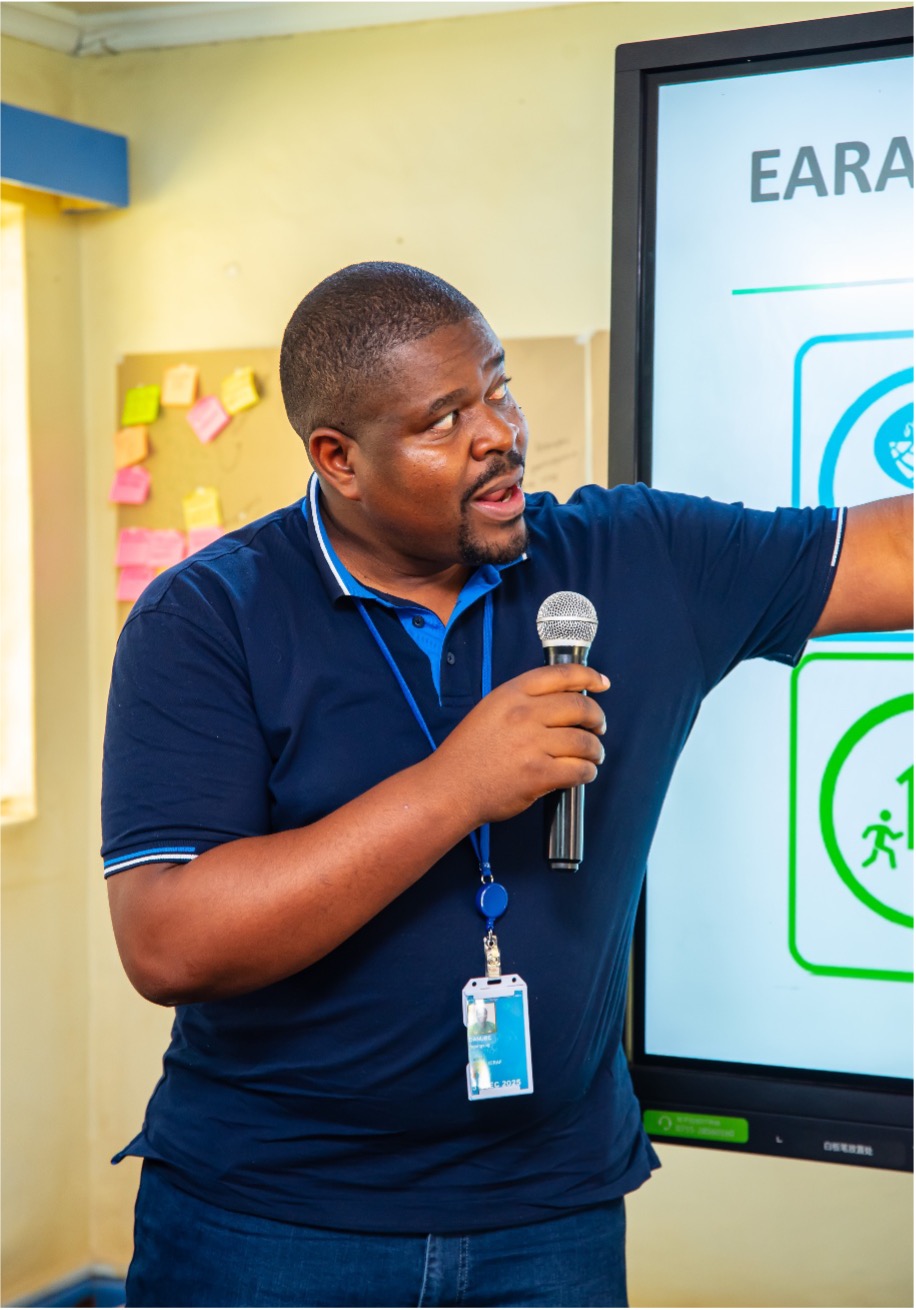
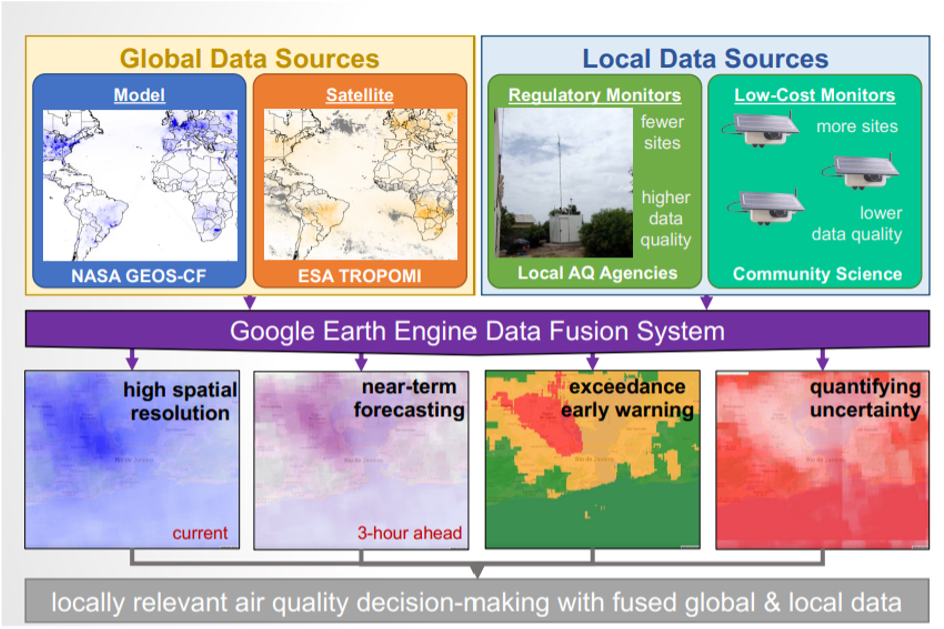
A feature presentation by Wandji Ngongang Danube, a Research Fellow at the Stockholm Environment Institute (SEI) on IoT and Data Modelling for Air Quality Analysis within Communities shared a unique perspective in the room on how SEI is using distributed IoT sensors across various locations in Kenya and other parts of the world to study the patterns of air quality and how that impacts communities’ health and the correlation with weather sensors. A very key point emerged that incorporated gender and local communities to be part of active contributors in shaping the datasets that inform air quality models.
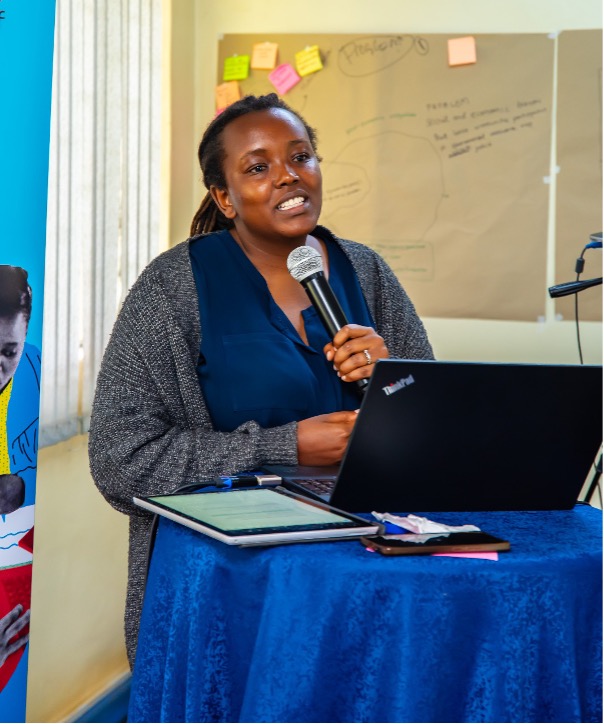
The afternoon session, led by Dr. Muriithi, provided a practical platform on how to work with datasets through the process of data preparation, cleaning and to the development of machine learning models. The co-creation with the community-centred connectivity groups in the room had an experience of experiment with weather data stored through spreadsheets.
The Anticipated Potential Next Steps
The anticipated next steps coming from the room experience includes further co-creation on site in the various locations where Athi CN, Kijiji Yeetu, Digital Rurals and Bahari CBO are located. We definitely look forward to further learning on digital innovation for climate adaptation on the ground while deploying practical IoT ecosystems and laying the groundwork for AI developments that can lead to the achievement of UNDP’s second pillar of strengthening people-centred and effective institutions and increasing access to justice among the local communities of the four groups.
